
WHY LISTENING MATTERS & HOW TO DO IT WELL
-

Feminist Prof. Loretta J. Ross Is Done With Cancel Culture | Amanpour and Company
Creating conversations to bridge differences is hard enough, but online it can be even tougher -- especially when one perceived misstep can see someone “called out” or “cancelled.” These two things can close down dialogue without addressing the problem, according to Loretta J. Ross. She tells Michel Martin about a class she's teaching on this subjec at Smith College.
-
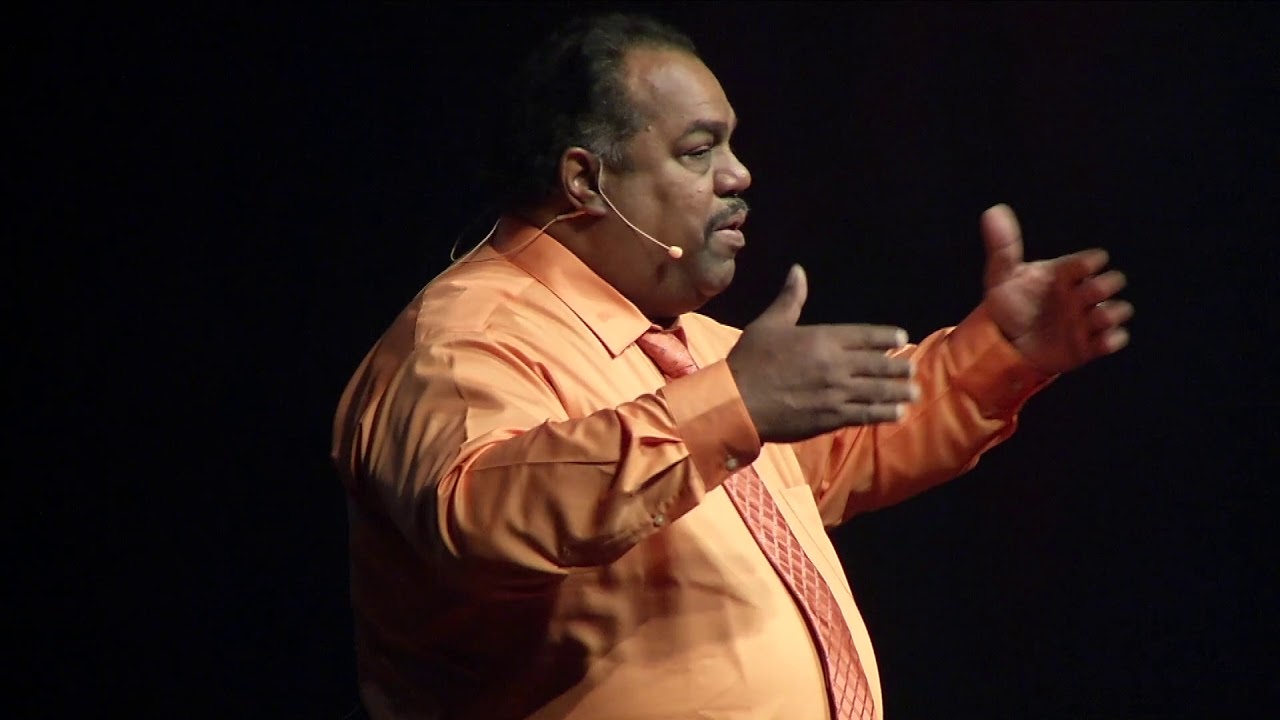
Why I, as a black man, attend KKK rallies. | Daryl Davis | TEDxNaperville
A chance encounter with members of the Ku Klux Klan led black musician Daryl Davis on a quest to determine the source of the hate. His unorthodox, yet simple approach, has wielded surprising results and just might be the solution for all racial discourse. Daryl Davis graduated from Howard University with a degree in Jazz. As a pianist, vocalist, and guitarist, he performs nationally and internationally with The Daryl Davis Band. He has also worked with such notables as Chuck Berry, Elvis Presley’s Jordanaires, The Legendary Blues Band, and many others. In 1983, A chance occurrence after one of his performances led him to befriend a member of the Ku Klux Klan. This eventually led Daryl to become the first black author to travel the country interviewing KKK leaders and members, all detailed in his book, Klan-Destine Relationships. Today, Daryl owns numerous Klan robes and hoods, given to him by active members who became his friends and renounced the organization. Since his journey began, Davis has joined an all-white country band, attended KKK rallies, and accepted a “certificate of friendship” from the Traditionalist American Knights of the KKK. He’s even the godfather of former Klan Imperial Wizard Roger Kelly’s granddaughter. Davis has received the Elliott-Black and MLK awards as well as numerous other local and national awards for his work in race relations, and is often sought by media outlets as a consultant on the KKK and race relations. He is also an actor with stage and screen credits, appearing in the critically acclaimed HBO police drama, The Wire, and most recently, as the subject of the documentary Accidental Courtesy, which filmed his real life encounters with Ku Klux Klan and neo-Nazi leaders as he helps to dismantle racism across the United States Davis has received the Elliott-Black and MLK awards as well as numerous other local and national awards for his work in race relations, and is often sought by media outlets as a consultant on the KKK and race relations. He is also an actor with stage and screen credits, appearing in the critically acclaimed HBO police drama, The Wire, and most recently, as the subject of the documentary Accidental Courtesy, which filmed his real life encounters with Ku Klux Klan and neo-Nazi leaders as he helps to dismantle racism across the United States. This talk was given at a TEDx event using the TED conference format but independently organized by a local community. Learn more at https://www.ted.com/tedx
-

How to give feedback so people hear you're trying to help
Sometimes acknowledging our weaknesses and limitations can actually make us stronger, suggests Adam Grant, an organizational psychologist, author and podcast host. But like arguing, there are constructive ways of giving feedback that can make another person feel like you're trying to help. Grant offers his Brief but Spectacular take on feedback. Find more from PBS NewsHour at https://www.pbs.org/newshour Subscribe to our YouTube channel: https://bit.ly/2HfsCD6
-

William Isaacs: Conversations that change the world
We live in an age of polarization, says William Isaacs, Senior Lecturer at the MIT Leadership Center at the MIT Sloan School of Management. Everywhere you look you see division and conflict between political parties, nations, ethnic groups, tribes, Isaacs says. Polarization leaves out the middle – all the possibilities for creative change. Isaacs explains how to create a dialogue “container” and why that might just be the key to world-changing conversations. MIT Sloan Experts Blog: http://mitsln.co/JKWN30b9NLp William Isaacs Biography: http://mitsln.co/nnq330b9NEz
-

This New Heineken Ad is Briliant
Let's discuss on a beer !
-

How to keep conversation alive in a polarized world | Jason Jay | TEDxBocaRaton
In our polarized world, it is easy for conversations to get stuck. How can we find new pathways forward on the big issues of our time, whether at the holiday dinner table, in our organizations, or on the wider political stage? Facilitator and author Jason Jay from MIT Sloan explores what happens inside ourselves when conversations go off the rails. He offers a tool called transformative contrasting to help people get unstuck and even harness the creative energy of polarization. Jason Jay is a Senior Lecturer at the MIT Sloan School of Management and Director of the Sustainability Initiative at MIT Sloan. His research focuses on how people navigate the tensions between personal, business, and social goals in sustainability efforts. His first book is Breaking Through Gridlock: The Power of Conversation in a Polarized World and he has published articles in the Academy of Management Journal and California Management Review. He teaches courses on strategy, innovation, and leadership for sustainable business at MIT, and engages students and alumni in hands-on projects with leading companies and organizations. Prior to MIT, Jason was a management consultant for Dialogos International, where he consulted on leadership development and organizational change for major international corporations and NGO's including BP and the World Bank. Jason holds a Ph.D. in Organization Studies from the MIT Sloan School of Management, and an AB and M.Ed from Harvard University. This talk was given at a TEDx event using the TED conference format but independently organized by a local community. Learn more at https://www.ted.com/tedx
-

How Can You Hate Me When You Don't Even Know Me?
Meet Daryl Davis, the Black man who's convinced more than 200 KKK members to leave the Klan.
-

Is America Hopelessly Polarized, or Just Allergic to Politics?
The good news about polarization is that it’s overstated — most Americans just really don’t like partisan squabbles.
https://www.nytimes.com/2019/04/12/opinion/polarization-politics-democrats-republicans.html
-

Abortion, Guns and Trump: A Church Group Tries to Navigate America’s Divisions
Abortion, Guns and Trump: A Church Group Tries to Navigate America’s Divisions
Calvary Christian Reformed in suburban Michigan seeks understanding through dialogue; ‘my soul is hurting’
-

How to have better arguments online
The troubled times we live in, and the rise of social media, have created an age of endless conflict. Rather than fearing or avoiding disagreement, we need to learn to do it well
By Ian Leslie -

How A Danish Town Helped Young Muslims Turn Away From ISIS
One day in 2012, a group of policemen in a Danish town were sitting around in the office when an unusual call came in. This town, called Aarhus, is a clean, orderly place with very little crime. So what the callers were saying really held the cops' attention. They were parents, and they were "just hysterical," recalled Thorleif Link, one of the officers. Their son was missing. They woke up one day and he was gone.
The officers put together whatever clues they had about the missing person: He was a teenager who went to a local high school, and he lived in a largely Muslim immigrant neighborhood just outside town. But before they got any further with their investigation, they got another call, from another set of parents. Their son was missing too.
-

“Your Ideas Are Not Your Identity”: Adam Grant on How to Get Better at Changing Your Mind
Changing our minds is hard, even in the most favorable conditions. There’s the risk of looking inconsistent or like you lack conviction; if you’re a politician, a flip-flopper. But there’s more to it than that.
Changing your mind, more often than not, requires you to grapple with your own identity. Admitting that you were wrong feels personal. We have to face the fact that we’ve been walking around the world all this time believing in something that isn’t true. Even worse, we have to admit that we’re the type of person who walks around being wrong. We know what we think of other people who do that—ugh, how embarrassing!
-

What if Instead of Calling People Out, We Called Them In?
Nyla Conaway, 19, remembers being “called out” for changing her profile picture on Instagram in solidarity for … something. She can’t quite remember what for, only that an older student she didn’t know told her it was a scam. “It just made me feel really embarrassed, like a ton of people had seen it and now I just looked really stupid,” she said.
Katie Wehrman, 18,still feels guilty for calling out a boy in her high school for something he said about a local politician and L.G.B.T.Q. rights — schooling him in an all-class Snapchat group.
-
Feminist Prof. Loretta J. Ross Is Done With Cancel Culture | Amanpour and Company Creating conversations to bridge differences is hard enough, but online it can be even tougher -- especially when one perceived misstep can see someone “called out” or “cancelled.” These two things can close down dialogue without addressing the problem, according to Loretta J. Ross. She tells Michel Martin about a class she's teaching on this subjec at Smith College.

-
Why I, as a black man, attend KKK rallies. | Daryl Davis | TEDxNaperville A chance encounter with members of the Ku Klux Klan led black musician Daryl Davis on a quest to determine the source of the hate. His unorthodox, yet simple approach, has wielded surprising results and just might be the solution for all racial discourse. Daryl Davis graduated from Howard University with a degree in Jazz. As a pianist, vocalist, and guitarist, he performs nationally and internationally with The Daryl Davis Band. He has also worked with such notables as Chuck Berry, Elvis Presley’s Jordanaires, The Legendary Blues Band, and many others. In 1983, A chance occurrence after one of his performances led him to befriend a member of the Ku Klux Klan. This eventually led Daryl to become the first black author to travel the country interviewing KKK leaders and members, all detailed in his book, Klan-Destine Relationships. Today, Daryl owns numerous Klan robes and hoods, given to him by active members who became his friends and renounced the organization. Since his journey began, Davis has joined an all-white country band, attended KKK rallies, and accepted a “certificate of friendship” from the Traditionalist American Knights of the KKK. He’s even the godfather of former Klan Imperial Wizard Roger Kelly’s granddaughter. Davis has received the Elliott-Black and MLK awards as well as numerous other local and national awards for his work in race relations, and is often sought by media outlets as a consultant on the KKK and race relations. He is also an actor with stage and screen credits, appearing in the critically acclaimed HBO police drama, The Wire, and most recently, as the subject of the documentary Accidental Courtesy, which filmed his real life encounters with Ku Klux Klan and neo-Nazi leaders as he helps to dismantle racism across the United States Davis has received the Elliott-Black and MLK awards as well as numerous other local and national awards for his work in race relations, and is often sought by media outlets as a consultant on the KKK and race relations. He is also an actor with stage and screen credits, appearing in the critically acclaimed HBO police drama, The Wire, and most recently, as the subject of the documentary Accidental Courtesy, which filmed his real life encounters with Ku Klux Klan and neo-Nazi leaders as he helps to dismantle racism across the United States. This talk was given at a TEDx event using the TED conference format but independently organized by a local community. Learn more at https://www.ted.com/tedx
-
How to give feedback so people hear you're trying to help Sometimes acknowledging our weaknesses and limitations can actually make us stronger, suggests Adam Grant, an organizational psychologist, author and podcast host. But like arguing, there are constructive ways of giving feedback that can make another person feel like you're trying to help. Grant offers his Brief but Spectacular take on feedback. Find more from PBS NewsHour at https://www.pbs.org/newshour Subscribe to our YouTube channel: https://bit.ly/2HfsCD6
-
William Isaacs: Conversations that change the world We live in an age of polarization, says William Isaacs, Senior Lecturer at the MIT Leadership Center at the MIT Sloan School of Management. Everywhere you look you see division and conflict between political parties, nations, ethnic groups, tribes, Isaacs says. Polarization leaves out the middle – all the possibilities for creative change. Isaacs explains how to create a dialogue “container” and why that might just be the key to world-changing conversations. MIT Sloan Experts Blog: http://mitsln.co/JKWN30b9NLp William Isaacs Biography: http://mitsln.co/nnq330b9NEz
-
This New Heineken Ad is Briliant Let's discuss on a beer !
-
How to keep conversation alive in a polarized world | Jason Jay | TEDxBocaRaton In our polarized world, it is easy for conversations to get stuck. How can we find new pathways forward on the big issues of our time, whether at the holiday dinner table, in our organizations, or on the wider political stage? Facilitator and author Jason Jay from MIT Sloan explores what happens inside ourselves when conversations go off the rails. He offers a tool called transformative contrasting to help people get unstuck and even harness the creative energy of polarization. Jason Jay is a Senior Lecturer at the MIT Sloan School of Management and Director of the Sustainability Initiative at MIT Sloan. His research focuses on how people navigate the tensions between personal, business, and social goals in sustainability efforts. His first book is Breaking Through Gridlock: The Power of Conversation in a Polarized World and he has published articles in the Academy of Management Journal and California Management Review. He teaches courses on strategy, innovation, and leadership for sustainable business at MIT, and engages students and alumni in hands-on projects with leading companies and organizations. Prior to MIT, Jason was a management consultant for Dialogos International, where he consulted on leadership development and organizational change for major international corporations and NGO's including BP and the World Bank. Jason holds a Ph.D. in Organization Studies from the MIT Sloan School of Management, and an AB and M.Ed from Harvard University. This talk was given at a TEDx event using the TED conference format but independently organized by a local community. Learn more at https://www.ted.com/tedx
-
How Can You Hate Me When You Don't Even Know Me? Meet Daryl Davis, the Black man who's convinced more than 200 KKK members to leave the Klan.
-
Is America Hopelessly Polarized, or Just Allergic to Politics? The good news about polarization is that it’s overstated — most Americans just really don’t like partisan squabbles.
https://www.nytimes.com/2019/04/12/opinion/polarization-politics-democrats-republicans.html
-
Abortion, Guns and Trump: A Church Group Tries to Navigate America’s Divisions Abortion, Guns and Trump: A Church Group Tries to Navigate America’s DivisionsCalvary Christian Reformed in suburban Michigan seeks understanding through dialogue; ‘my soul is hurting’
-
How to have better arguments online The troubled times we live in, and the rise of social media, have created an age of endless conflict. Rather than fearing or avoiding disagreement, we need to learn to do it well
By Ian Leslie -
How A Danish Town Helped Young Muslims Turn Away From ISIS One day in 2012, a group of policemen in a Danish town were sitting around in the office when an unusual call came in. This town, called Aarhus, is a clean, orderly place with very little crime. So what the callers were saying really held the cops' attention. They were parents, and they were "just hysterical," recalled Thorleif Link, one of the officers. Their son was missing. They woke up one day and he was gone.
The officers put together whatever clues they had about the missing person: He was a teenager who went to a local high school, and he lived in a largely Muslim immigrant neighborhood just outside town. But before they got any further with their investigation, they got another call, from another set of parents. Their son was missing too.
-
“Your Ideas Are Not Your Identity”: Adam Grant on How to Get Better at Changing Your Mind Changing our minds is hard, even in the most favorable conditions. There’s the risk of looking inconsistent or like you lack conviction; if you’re a politician, a flip-flopper. But there’s more to it than that.
Changing your mind, more often than not, requires you to grapple with your own identity. Admitting that you were wrong feels personal. We have to face the fact that we’ve been walking around the world all this time believing in something that isn’t true. Even worse, we have to admit that we’re the type of person who walks around being wrong. We know what we think of other people who do that—ugh, how embarrassing!
-
What if Instead of Calling People Out, We Called Them In? Nyla Conaway, 19, remembers being “called out” for changing her profile picture on Instagram in solidarity for … something. She can’t quite remember what for, only that an older student she didn’t know told her it was a scam. “It just made me feel really embarrassed, like a ton of people had seen it and now I just looked really stupid,” she said.
Katie Wehrman, 18,still feels guilty for calling out a boy in her high school for something he said about a local politician and L.G.B.T.Q. rights — schooling him in an all-class Snapchat group.
OTHERS WHO DO GREAT WORK


